Who Is The Richest Person Of All Time

Picture this: You’re sitting at a café, sipping your third latte of the day, when your friend leans over and whispers, *"So, who’s the richest person who ever lived?"* You tak...

Picture this: You’re sitting at a café, sipping your third latte of the day, when your friend leans over and whispers, "So, who’s the richest person who ever lived?" You take a sip, consider your options, and realize this is the kind of question that could either make you sound smart or just really confused. Turns out, the answer is a mix of both—because the richest person of all time wasn’t just some guy who won the lottery (though we’d all love to know how that works).
Enter Mansa Musa, the African emperor of Mali in the 14th century, who dropped so much gold in Cairo that he literally crashed the economy. We’re talking about a dude who gave away so much wealth that for a decade afterward, the value of gold in Egypt was lowered because, well, there was just too much of it floating around. Imagine if Jeff Bezos handed out gold bars like Halloween candy—except instead of trick-or-treaters, you’ve got a whole city of confused goldsmiths.
Meet Mansa Musa: The Guy Who Made Gold Look Cheap
Mansa Musa wasn’t just some random king with a side hustle in gold—he was the richest person in history, period. His empire, Mali, was so wealthy that when he went on his famous pilgrimage to Mecca in 1324, he brought along 60,000 people and 80 camels loaded with gold. That’s not a side trip; that’s a golden parade.
Must Read
For context, if Mansa Musa were alive today, he’d be worth somewhere around $400–$500 billion—more than Jeff Bezos, Elon Musk, and Warren Buffett combined. And here’s the kicker: he didn’t even have a stock portfolio. His wealth came from salt and gold mines, trade routes, and the fact that he was basically the Black Sheepdora of medieval Africa—everyone wanted a piece of him.
How Did He Get So Rich?
Mali’s fortune was built on two things: salt and gold. Salt was basically the ketchup of the Middle Ages—you needed it to preserve food, and without it, your stew tasted like regret. Meanwhile, gold was so abundant in Mali that the river Sankarani was literally called the "River of Gold" because it had so much of it washing through. Mansa Musa’s grandfather, Sundiata Keita, had united the region and turned Mali into a trading powerhouse.
The empire’s wealth wasn’t just about raw materials—it was about control. Mansa Musa had a network of traders stretching from the Atlantic Ocean to the Sahara Desert. If you wanted gold in Europe, you went through Mali. If you wanted salt in West Africa, you went through Mali. It was like being the Uber of medieval trade, except instead of rides, you were moving entire shipments of treasure.
And let’s not forget his personal spending habits. When Mansa Musa arrived in Cairo, he gave away so much gold that he distorted the currency. Gold prices dropped by 25% for a whole year because, well, there was just too much of it. Imagine if you walked into a Starbucks and handed the barista a golden bar for your latte—now imagine doing that every day for a month.
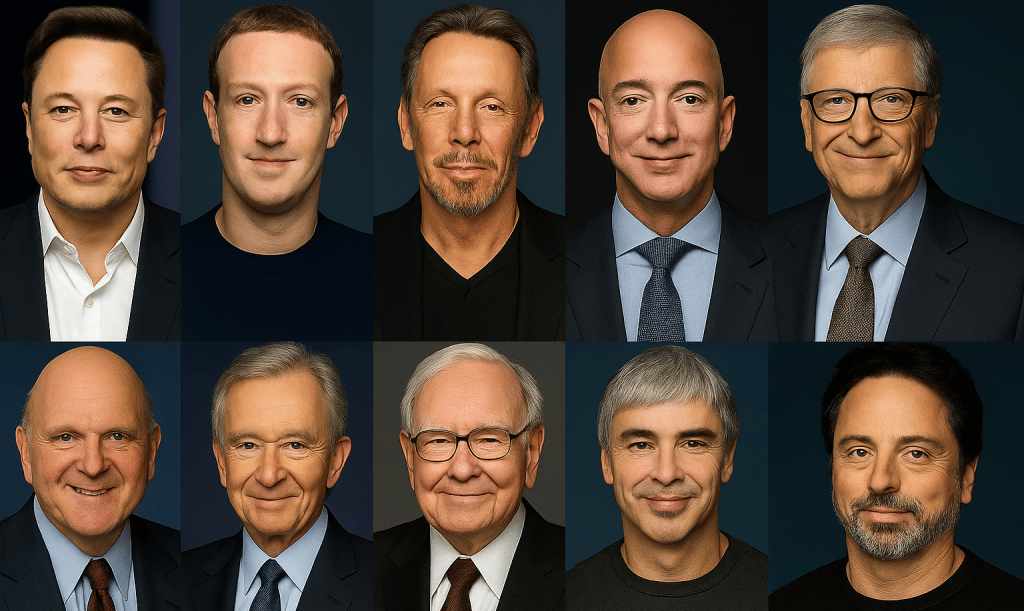 World’s Richest People 2026: AI Wealth Takes Over
What Did He Do With All That Money?
You’d think with that kind of wealth, Mansa Musa would’ve been hoarding gold like Scrooge McDuck, but he was actually a philanthropist. He built mosques, schools, and universities across West Africa, including the famous University of Sankore in Timbuktu, which was a hub of learning long before Harvard existed. He also funded artists, architects, and scholars, turning Mali into a cultural powerhouse.
He also invested in infrastructure. Roads, bridges, and trade routes were his thing—basically, he was the Warren Buffett of the 1300s, but instead of stocks, he was betting on camel caravans. And because he was such a generous guy, he even paid off debts for people who couldn’t afford it. Talk about a good king.
Oh, and he had style. Mansa Musa was known for his lavish clothing, including a robe said to be made of gold thread that weighed 350 pounds. That’s not a robe; that’s a mobile fortress of wealth. He also had a harem of 100 wives (because why not?), but let’s not get distracted—this is about the money, not the drama.
How Does He Compare to Modern Billionaires?
If you’re thinking, "But what about Jeff Bezos? Or Bill Gates?"—good question! While modern billionaires have more money in the bank, Mansa Musa’s wealth was more concentrated and immediate. Today’s richest people have stocks, bonds, and real estate, but Mansa Musa’s fortune was pure, tangible gold—no digital wallets, just actual gold bars.
Another difference? Inflation. Mansa Musa’s gold was worth so much because it was rare and valuable. Today, gold is still valuable, but it’s not the only way to measure wealth. Bezos has Amazon stock, Musk has Tesla and SpaceX, and Gates has Microsoft—all of which could be worth more or less depending on the market. Mansa Musa’s wealth? No market needed.
 World's Richest Man in 2024: Who Tops the Billionaire List?
And let’s talk about legacy. While Bezos and Musk are known for their tech empires, Mansa Musa’s legacy is cultural and historical. He didn’t just make money—he built a civilization. Timbuktu became a center of learning, and Mali’s golden age lasted for centuries. That’s not just wealth—that’s power.
Could Anyone Be Richer Than Mansa Musa?
If we’re talking absolute, unadulterated wealth, Mansa Musa is still king. But if we’re talking modern economics, some might argue that John D. Rockefeller (the oil tycoon) or Andrew Carnegie (the steel magnate) had more concentrated wealth at their peaks. Rockefeller was worth about $400 billion in today’s money at his highest, but Mansa Musa’s wealth was more liquid and immediate.
Then there’s King Solomon, the biblical figure who was said to be richer than Mansa Musa. But let’s be real—no one knows for sure how much Solomon was worth, and his wealth was more about divine favor than actual gold mines. So while he’s fun to talk about, we’ll stick with Mansa Musa for the definitive richest person.
And here’s the thing: Mansa Musa’s wealth wasn’t just about numbers. It was about influence, culture, and legacy. He didn’t just have money—he changed the world. So next time someone asks who the richest person ever was, you can sit back, take a sip of your latte, and drop the name Mansa Musa like it’s nothing.
Because let’s face it—if you could travel back in time and hand Mansa Musa your credit card, he’d probably just give it back and say, "No, son. Gold is better."
