How To Convert 220v To 110v Without Transformer

Ever found yourself in a global gadget dilemma? You're in Paris, Paris is in love with 220V, but your trusty American hairdryer is all like, "Nope, 110V only, please." Don't l...

Ever found yourself in a global gadget dilemma? You're in Paris, Paris is in love with 220V, but your trusty American hairdryer is all like, "Nope, 110V only, please." Don't let the voltage difference leave you in a tangled mess. Let's chat about how to convert 220V to 110V without a transformer. Yes, you read that right. No heavy, clunky transformer needed!
Why Bother?
First things first, why should you care about this voltage voodoo? Well, let me tell you, it's not just about your hair. Those tiny numbers make a big difference. Too much juice, and you could fry your electronics. Too little, and they'll be as useful as a chocolate teapot. So, let's keep our gadgets happy and safe, yeah?
Meet the Buck Converter
Now, let's talk about the star of our show, the buck converter. It's like the cool kid at the voltage party, making sure everyone's got enough to drink (or in this case, power). It's a power supply that steps down voltage (in plain English, it makes 220V chill out to 110V).
Must Read
But here's the kicker, folks. Unlike its transformer cousin, the buck converter is way more chill. It's lighter, it's smaller, and it's way easier to pack in your suitcase. Plus, it's not just for travel. It's great for DIY projects, too. Who knew voltage conversion could be so versatile?
How Does It Work?
Alright, let's get a bit techy for a sec. The buck converter works its magic using a switch-mode power supply. It's like the bouncer at a power club, letting the right amount of juice in, and keeping the rest out. It switches the power on and off super fast, so fast that it looks like one steady flow to your gadgets.
And the best part? It's not just for 220V to 110V. Buck converters can handle all sorts of voltage parties. Want to go from 12V to 5V? No prob. 19V to 12V? Easy peasy. It's like the ultimate voltage matchmaker!
Let's Get Practical
Alright, enough chit-chat. Let's get down to business. Here's what you'll need:
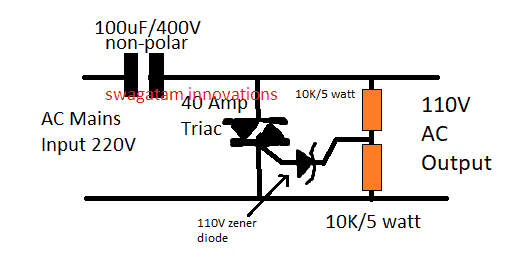 How to Make a 220V to 110V Converter Circuit - Homemade Circuit Projects
- A buck converter (obviously)
- Some basic tools (screwdriver, wire strippers, etc.)
- Patience (this isn't a microwave meal, folks)
First, make sure your converter is up to the task. Check the wattage. If your gadget needs more power than the converter can handle, it's time to find a new converter, not a new gadget.
Next, strip some wire. You'll need to connect the converter to the power source and your gadget. It's like a tiny, electrical game of Operation. Don't touch the sides!
Now, connect the converter to your power source. Then, connect your gadget to the converter. And there you have it. 220V is now 110V, and your gadget is happy as a clam.
Safety First
Before you start playing voltage DJ, let's talk safety. Always make sure your converter is from a reputable brand. Cheap knock-offs can be as dangerous as they are cheap. Also, never connect or disconnect anything while the power is on. That's just asking for trouble.
 Make 220V AC to 110V DC Motor Supply Circuit without Transformer - YouTube
And remember, if you're not sure, ask. There's no shame in admitting you're out of your depth. It's better than admitting you're out of commission. Safety first, folks!
Why This Is Just Plain Fun
So, why should you care about all this voltage voodoo? Because it's fun! It's like being a mad scientist, playing with power, and keeping your gadgets happy. It's a chance to get hands-on, learn something new, and maybe even impress your friends.
Plus, it's a chance to travel the world without leaving your gadgets behind. No more buying new stuff every time you cross a border. It's like having a superpower. A voltage-converting superpower!
So, the next time you're packing your bags, don't forget to pack a buck converter. It might not be the most exciting thing in your suitcase, but it just might be the most useful. And who knows? You might even have a blast (pun intended) learning about voltage along the way.
