How To Hook Up Subs And Amp

Ever felt like your tunes could use a little more oomph? Like, you're jamming out to your favorite playlist, but it's just not hitting the same way it does at a concert? Well,...

Ever felt like your tunes could use a little more oomph? Like, you're jamming out to your favorite playlist, but it's just not hitting the same way it does at a concert? Well, my friend, it's time to talk about hooking up your subs and amp. It's like giving your music a superpower – and who doesn't want that?
First Things First: What's the Deal with Subs and Amps?
Alright, let's break it down. Subwoofers, or 'subs' as the cool kids call them, are like the bass whisperers of the audio world. They're responsible for those low, rumbling notes that make your chest vibrate and your neighbors wonder if you're secretly housing a nightclub in your garage.
Amps, on the other hand, are the powerhouses. They're the ones beefing up your audio signal, giving it the juice it needs to make your subs work their magic. Think of them as the personal trainers of the music world, helping your tunes get in tip-top shape.
Must Read
Before You Start: A Word on Safety
Now, before we dive into the fun stuff, let's talk safety. Hooking up subs and amps can involve electricity, and we all know what they say about too much of a good thing. So, make sure your gear is turned off and unplugged before you start tinkering. And if you're not sure about something, don't be afraid to ask for help. We're all here to learn, right?
Pro Tip: The 'Popcorn Test'
Here's a fun fact for you: Did you know that popcorn kernels can pop at different temperatures? That's right, some might pop at 170°F, while others need a scorching 340°F. It's like the popcorn version of Goldilocks – some are too hot, some are too cold, and some are just right.
So, what does this have to do with your subs and amp? Well, it's a reminder that everyone's setup is different. What works for one person might not work for another. So, don't be afraid to experiment and find what's 'just right' for you.
Alright, Let's Get This Party Started!
First things first, you're going to want to gather your gear. That means your subs, your amp, some speaker wire, and maybe a few tools like a screwdriver and some wire strippers. Think of it like a musical toolkit – the more you have, the more you can create!
 How To Match Subwoofers and Amplifiers - Sonic Electronix Learning
Step 1: Connecting Your Subs to Your Amp
Now, let's talk connections. Your amp should have a pair of speaker-level inputs and a pair of outputs. The inputs are where you'll connect your head unit or receiver, and the outputs are where your subs will go.
First, connect your head unit or receiver to the amp's inputs using RCA cables. Then, it's time to connect your subs. Most subs have two terminals – one positive and one negative. The positive terminal is usually marked with a '+' or a red line, and the negative is marked with a '-' or a black line.
Take your speaker wire and strip about an inch of insulation off each end. Then, twist the exposed wire around the terminals on your sub and amp, making sure to match the positive and negative poles. It's like a musical game of Twister – but with way less spandex.
Step 2: Setting Your Gain
Now that your subs are connected, it's time to set your gain. The gain knob on your amp controls the volume of the signal sent to your subs. You'll want to turn it up until you hear a faint hissing sound, then back it off a bit. This ensures that your amp is getting a strong signal, but not so strong that it distorts your music.
Here's a fun fact for you: Did you know that the human ear can detect sounds as low as -120 dB? That's like hearing a pin drop from across the room. So, when you're adjusting your gain, remember that you're working with some seriously sensitive equipment.
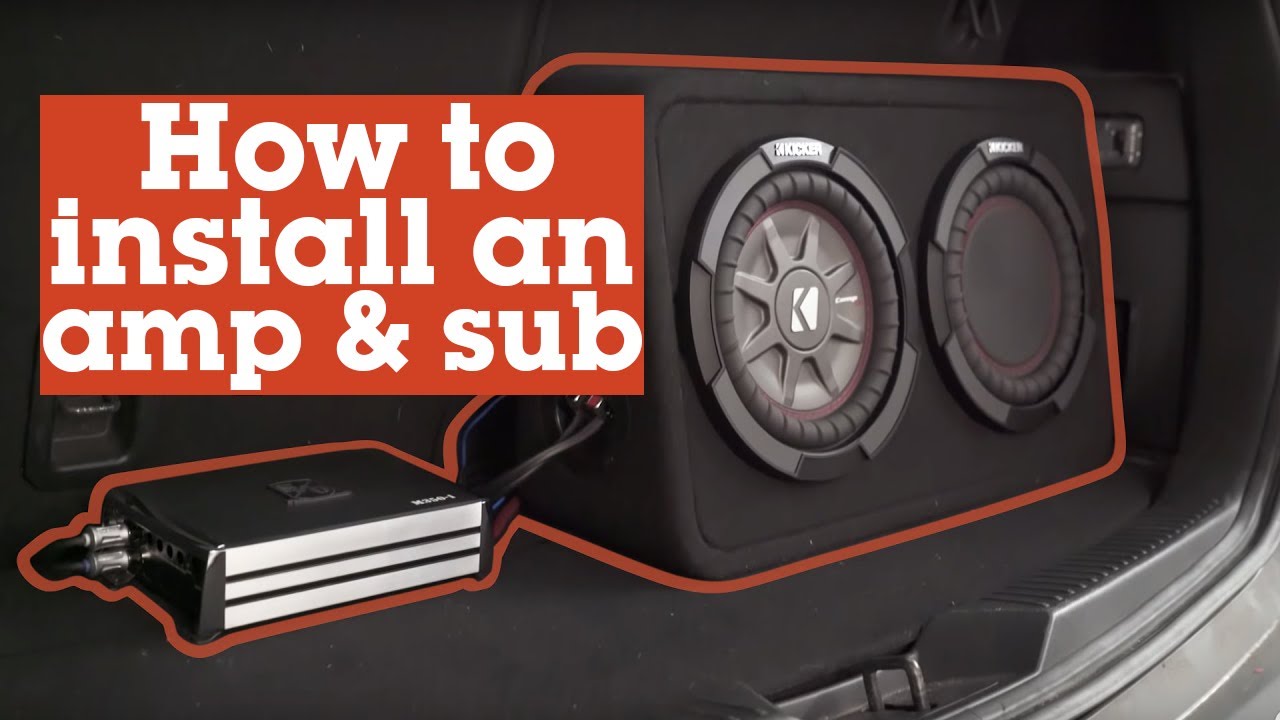 How to install an amp and sub in your car | Crutchfield video - YouTube
Step 3: The Final Touch: Power
Alright, we're almost there. The last thing you need to do is connect your amp to a power source. Most amps use a power wire with a fuse and an inline circuit breaker. Connect this to your car's battery, making sure to match the positive and negative poles.
Now, here's where things get exciting. Turn on your head unit or receiver, and give your music a test run. If everything's connected properly, you should hear that bass kicking in, giving your tunes the oomph they've been missing.
And That's a Wrap!
And there you have it – hooking up your subs and amp in a nutshell. It's like giving your music a backstage pass to the best concert ever. So, crank up the tunes, feel the bass, and enjoy your newfound musical superpowers.
But remember, with great power comes great responsibility. Don't go blasting your tunes so loud that you disturb the neighbors (or the local wildlife). We all love a good jam session, but nobody wants to be that guy (or girl) who's always playing their music too loud.
So, go forth, experiment, and most importantly, have fun. After all, music is about expressing yourself, and there's no better way to do that than with a killer sound system. Happy jamming!
