Can You Sue If You Get Fired

So, you've just been given the old heave-ho, the boot, the 'thanks, but no thanks' from your job. It's a bummer, right? But then, a little voice in your head pipes up, "Can I...

So, you've just been given the old heave-ho, the boot, the 'thanks, but no thanks' from your job. It's a bummer, right? But then, a little voice in your head pipes up, "Can I sue them?!" Well, let's dive into the fun world of wrongful termination and find out if you've got a case, or if you're just better off suing for emotional damages (read: ice cream).
First things first: At-will employment
Let's start with the big, boring, but kinda important stuff. In most places, employment is 'at-will'. This means you can quit whenever you want, and your boss can fire you for any reason, or no reason at all. Isn't that just peachy?
But wait! There's a catch. You can't be fired for illegal reasons. So, what's illegal? Well, that's where it gets interesting.
Must Read
Illegal reasons to get the axe
Discrimination: The big no-no
Firing someone because of their race, gender, religion, age, disability, or national origin? That's a big ol' no-no. It's against the law, and it's called discrimination. If you've been fired for any of these reasons, you might have a case.
But here's the thing: You've got to prove it. That means you'll need some solid evidence. Like, maybe your boss said something discriminatory, or you've got emails that show favoritism. It's not enough to just say, "I think they fired me because I'm left-handed."
Retaliation: When standing up for your rights gets you fired
Let's say you reported your boss for something shady, like stealing office supplies or being a general jerk. Then, suddenly, you're out of a job. That's called retaliation, and it's illegal.
Again, you'll need evidence. But this time, it's a bit easier. You can use things like emails, texts, or even witnesses who heard your boss saying something like, "If you rat me out, you're history!"
Breaking the contract: When the rules change
If you've got an employment contract, your boss can't just fire you willy-nilly. But if they do, and you can prove it, you might have a case. The same goes for if they change the terms of your employment in a way that's against the contract.
For example, let's say your contract says you'll get a raise every year, but your boss decides to skip a year. That's a breach of contract, and you might be able to sue. But remember, you've got to prove it.
What about all those other reasons?
What if you were fired because you're just not that good at your job? Or because your boss doesn't like your haircut? Or because you refused to do something illegal? Unfortunately, in most places, these aren't illegal reasons to get fired.
But here's where it gets interesting: Some states have laws that protect employees from being fired for certain reasons. For example, in some places, you can't be fired for being a whistleblower (someone who reports illegal activity), or for taking time off to vote or serve on a jury.
 Can You Sue If You Get Fired While Pregnant in California? 2026
And even if your state doesn't have these laws, you might still have a case. Maybe your firing was against public policy. What's that, you ask? Well, it's a bit of a gray area, but basically, it's when your firing goes against what society thinks is fair and right.
So, can you sue?
Alright, so you've read all this, and you're thinking, "Hey, that's me! I can totally sue!" Not so fast, buddy. Before you start drafting your lawsuit, there are a few more things to consider.
Do you have a case?
First things first: Do you actually have a case? You might think you do, but it's always a good idea to get a professional opinion. That's where employment lawyers come in. They can look at your situation and tell you if you've got a shot at winning a lawsuit.
But here's the thing: Employment lawyers are expensive. Like, really expensive. So, before you start shelling out cash, make sure you've got a solid case. And if you can't afford a lawyer, there are organizations that can help. A quick Google search should point you in the right direction.
Is it worth it?
Let's say you've got a case. You've got your evidence, you've got your lawyer, and you're ready to rumble. But here's something to consider: Is it worth it?
Lawsuits are time-consuming, stressful, and expensive. And even if you win, you might not get your job back. Sometimes, it's just not worth the hassle. But other times, it is. It's a personal decision, and only you can make it.
What if you lose?
Alright, so you've decided to sue. You've got your case, you've got your lawyer, and you're feeling pretty good about your chances. But what if you lose? What then?
Well, first of all, don't panic. Losing a lawsuit doesn't mean you're a failure. It just means that, this time, the judge didn't see things your way. It happens.
But here's the thing: If you lose, you might have to pay your employer's legal fees. That's right, you could end up paying your former boss for the privilege of suing them. It's not fair, but that's the way the cookie crumbles.
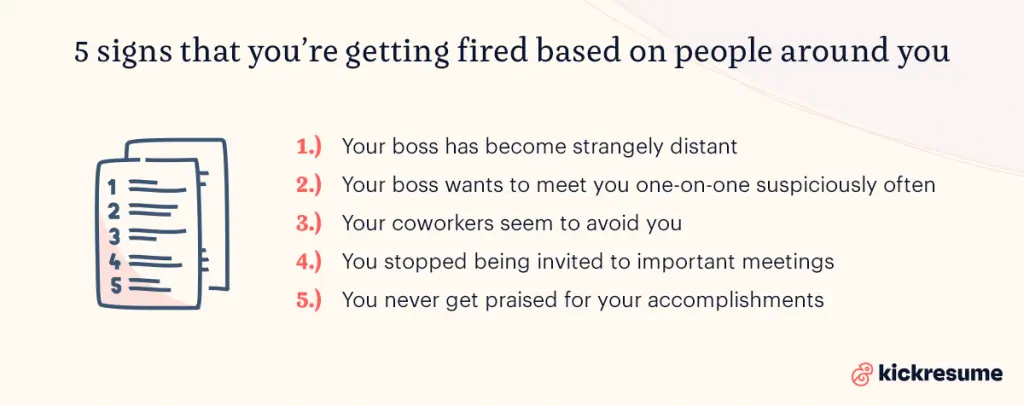 Top 20+ Warning Signs You're About to Be Fired (Sorry.) | Kickresume Blog
So, before you sue, make sure you've got a solid case. And if you're not sure, talk to an employment lawyer. They can give you the straight talk you need to make the right decision.
What if you win?
Alright, so you've won your lawsuit. Congratulations! You've stuck it to the man, and now you're ready to cash in. But here's the thing: Winning a lawsuit doesn't always mean you get what you want.
Sure, you might get some money. But you might not. It depends on the specifics of your case. And even if you do get money, it might not be as much as you were hoping for. Lawsuits are expensive, and lawyers take a big chunk of the settlement.
So, before you sue, make sure you've thought it through. Make sure you know what you're getting into, and what you're hoping to get out of it. Because winning a lawsuit is great, but it's not always the answer.
So, what now?
Alright, so you've read all this, and you're still not sure what to do. That's okay. It's a tough situation, and there's no one-size-fits-all answer. But here are a few things to remember:
First, don't panic. Getting fired is never fun, but it's not the end of the world. You'll find another job, and you'll be okay.
Second, don't be afraid to ask for help. There are people out there who can help you, from employment lawyers to career counselors. Don't be too proud to ask for a hand.
And finally, don't let getting fired define you. It's a setback, sure, but it's not a reflection of your worth as a person. You're more than your job, and you'll prove it to yourself and the world.
So, can you sue if you get fired? Maybe. But before you do, make sure you've thought it through. And remember, no matter what happens, you'll be okay. You're tougher than you think, and you've got this.
