How To Find Area Of A Nonagon

Hey there, math whiz! Ever found yourself staring at a nonagon, wondering "How on Earth do I find its area?" I mean, it's not like it's a square or a circle, right? But fear n...
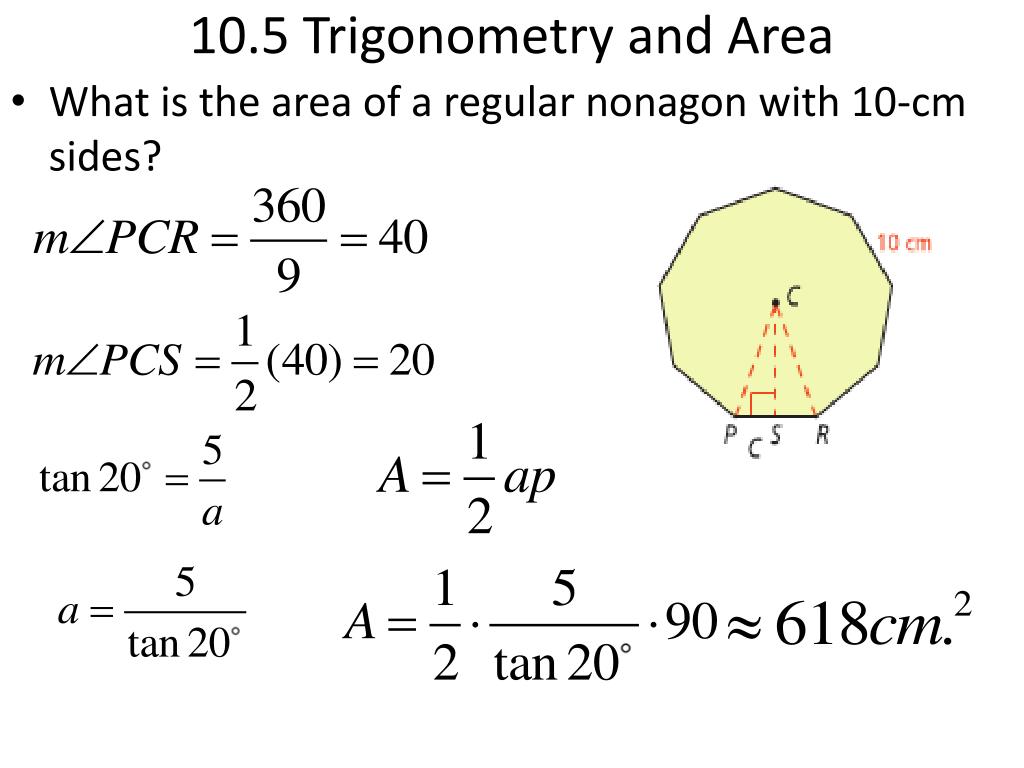
Hey there, math whiz! Ever found yourself staring at a nonagon, wondering "How on Earth do I find its area?" I mean, it's not like it's a square or a circle, right? But fear not, my friend, we're gonna tackle this together. Grab your favorite snack, let's dive in!
First things first: What's a nonagon?
Alright, so a nonagon is just a fancy word for a nine-sided polygon. You know, like that star shape in the Snow White logo, or the PlayStation button. Nine sides, nine angles, nine times the fun (well, maybe not that last one).
Why can't we just use the usual area formulas?
Well, unlike our square and triangle friends, nonagons don't have neat little formulas. They're a bit... eccentric. So, we'll need to get a little creative. But don't worry, it's not as scary as it sounds. Promise!
Must Read
Introducing: The Divide and Conquer method
Now, imagine you're a secret agent, and that nonagon is a top-secret map. To unlock its secrets, we'll divide it into shapes we do know how to calculate the area of. Clever, huh?
Step 1: Draw those diagonals
First, grab your trusty pencil and draw lines (diagonals, to be precise) from one corner of the nonagon to the opposite corner. Keep doing this until you've created a bunch of triangles. It's like playing connect-the-dots, but with fewer dots and more math.
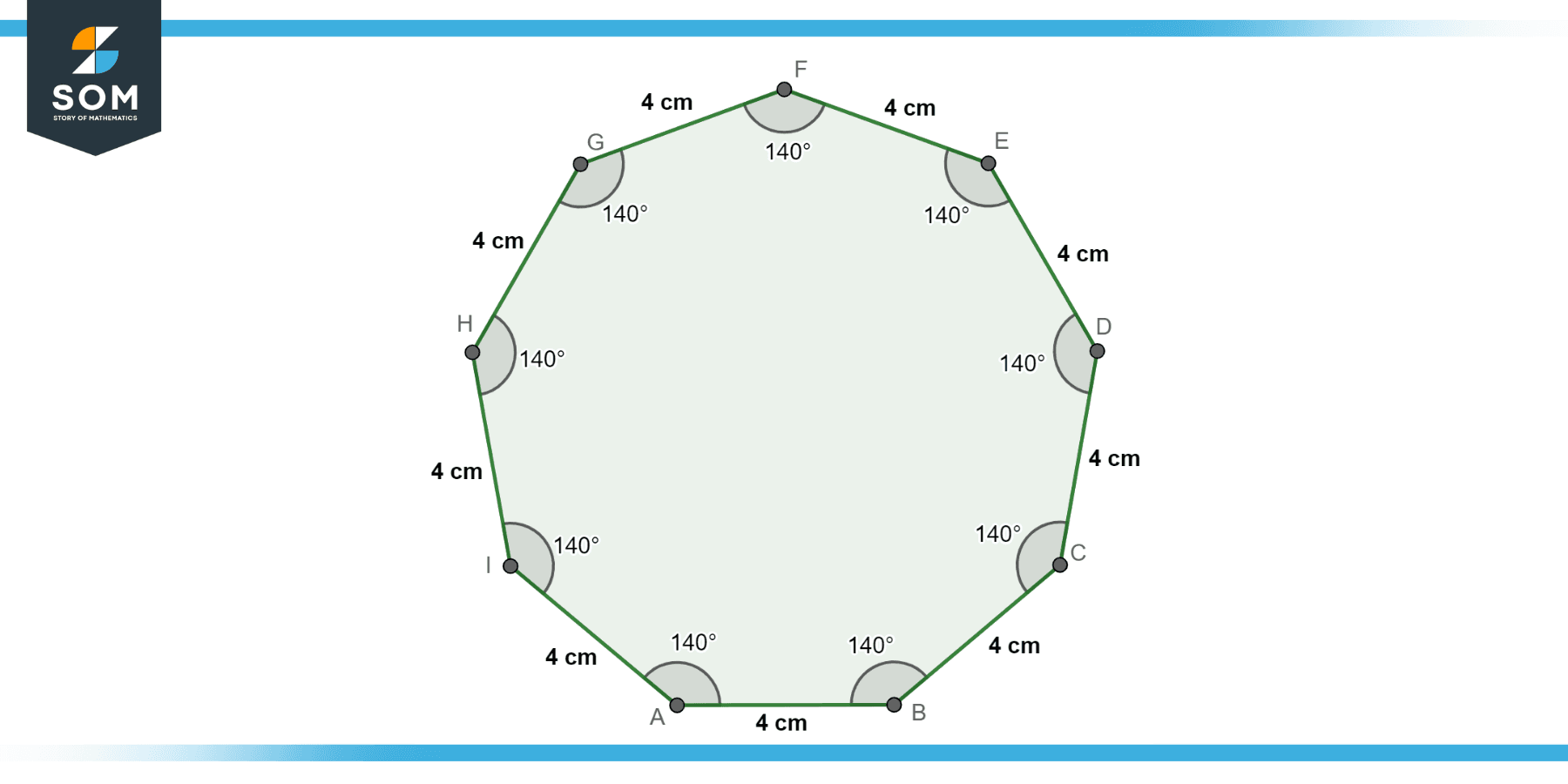 The Nonagon - A Comprehensive Guide
Step 2: Calculate the area of each triangle
Now, look at those triangles. See how they're all isosceles? That means we can use the formula for the area of a triangle: Area = (base * height) / 2. The base and height of our triangles are just the lengths of the sides of the nonagon. Easy peasy!
Step 3: Add 'em up!
Once you've found the area of each triangle, add them all together. Voila! You've just calculated the area of a nonagon. Feel like a math rockstar yet? You should!
 How to Find the Area of Regular Polygons (with Examples)
But what if my nonagon's not regular?
Don't worry, we can still be friends. The method's pretty much the same, but you'll need to use the actual lengths of the sides and the measures of the angles to find the heights of the triangles. It's a bit more work, but you've got this!
Practice makes perfect
Now that you know how to find the area of a nonagon, why not try it out on some other polygons? Who knows, you might just become the next great geometrician. (That's a word, right? Let's make it a word.)
And there you have it! You've just learned how to find the area of a nonagon. Wasn't so bad, was it? Now go forth, math hero, and conquer those nine-sided shapes!
