What Plug Do I Need For India

Alright folks, let's talk plugs. You know, those little guys that keep our gadgets from going 'bye-bye' when the juice runs out. Now, you're planning a trip to India, and you'...

Alright folks, let's talk plugs. You know, those little guys that keep our gadgets from going 'bye-bye' when the juice runs out. Now, you're planning a trip to India, and you're wondering, "What kind of plug do I need for this exotic land?" Well, buckle up, because we're about to dive into a world of sockets, pins, and a whole lot of 'why isn't this simple?!'
First Things First: Let's Get Acquainted
India, much like its cuisine, is a mix of the old and the new. And when it comes to plugs, it's no different. You'll find a mishmash of sockets, but the most common one is the Type C or the 'Europlug'. It's like the laid-back, easy-going cousin of the plug family. It fits into any socket without any fuss, and it's used in most of Europe too. So, if you've been to any of those places, you're already halfway there.
But, and there's always a 'but', India also uses the Type D plug. This one's a bit more formal, with three round pins. It's like the Indian equivalent of a 'formal dress code' event. You can't just waltz in with your Type C plug. You need to dress up, or rather, plug up, with the right gear.
Must Read
Now, Let's Talk About Adapters
Adapters, they're like the wingmen of the plug world. They make sure your gadget gets a date with the right socket. For India, you'll need an adapter that can convert your plug from Type A, B, or E (which are the common types in the US, UK, and some parts of Europe) to Type C or D.
Imagine you're at a party, and you're from the US. You've got your cool American accent, but no one understands you. That's when you need a translator, or in this case, an adapter. It helps you communicate, or rather, connect, with the local sockets.
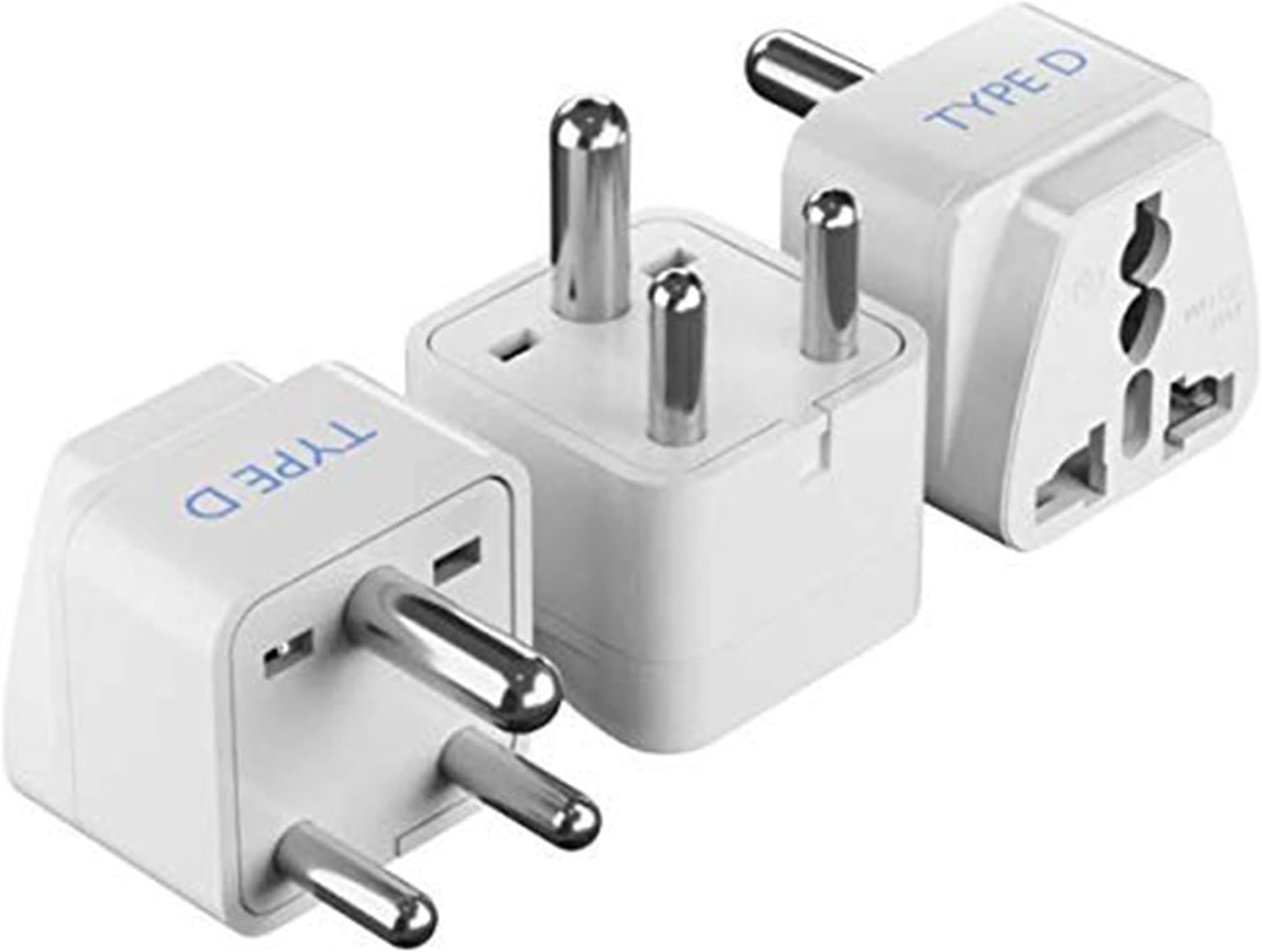 Orei USA to India Adapter Plug, World (USA, UK, China & More) Australia
But Wait, There's More!
Now, you might be thinking, "I've got my adapter, I'm ready to rock and roll!" But hold your horses, because India's electrical system is a bit... well, unpredictable. It's like a rollercoaster ride. Sometimes it's smooth, other times it's a wild, bumpy adventure.
You see, India runs on 230V and 50Hz. That's a bit different from the US (120V, 60Hz) and some parts of Europe (220V, 50Hz). So, if your gadget isn't dual-voltage, you might need a converter too. It's like going from a quiet library to a rock concert. Your gadget might not handle the change very well.
But don't worry, most modern gadgets are dual-voltage these days. It's like they've been to the 'voltage conversion boot camp' and can handle the change like a pro. But it's always a good idea to double-check, just to be safe.
 What Plug Do I Need For India: Complete Guide & Key Details | TAFT
And Finally, A Word of Caution
India's electrical system can be a bit temperamental. There are power cuts, voltage fluctuations, and sometimes, the sockets just don't want to play nice. So, always keep an eye on your gadgets. If something starts acting up, unplug it immediately.
It's like going on a hike. You need to keep an eye on the trail, because you never know when you might encounter a sudden drop or a slippery patch. In this case, the 'trail' is your gadget, and the 'sudden drop' is a power surge or a short circuit.
But don't let all this scare you. India's a wonderful place, and with the right preparation, you'll have a fantastic time. Just remember, when it comes to plugs, it's always better to be safe than sorry.
