What Is A Good 10km Run Time

Ever wondered if your 10km run time is up to par? You're not alone. Whether you're a seasoned runner or just starting out, knowing a good 10km run time can be a great benchmar...

Ever wondered if your 10km run time is up to par? You're not alone. Whether you're a seasoned runner or just starting out, knowing a good 10km run time can be a great benchmark for your progress. So, grab your sneakers and let's dive in!
What's a Good 10km Run Time?
First things first, let's talk about what constitutes a 'good' time. It's important to remember that everyone's fitness journey is unique, and what's good for one might not be for another. That being said, let's look at some general guidelines.
For men, a good 10km run time is typically around 35 to 45 minutes. For women, it's usually between 40 to 55 minutes. But remember, these are just averages. Elite runners can finish a 10km in under 30 minutes, while beginners might take closer to an hour.
Must Read
But why stop at averages? Let's look at some record-breaking times. Kenya's Leonard Komon holds the men's world record for 10km with an astonishing time of 26:44. For women, it's Ethiopia's Tirunesh Dibaba with a time of 30:25. Now that's what we call speedy!
How to Improve Your 10km Run Time
Now that you've got an idea of what a good 10km run time looks like, let's talk about how to improve yours. Here are some tips to help you shave off those minutes.
Consistency is Key
In the words of the great Aristotle, "We are what we repeatedly do. Excellence, then, is not an act, but a habit." Consistency is crucial in improving your run time. Aim for at least three to four runs a week, with a mix of easy, moderate, and hard efforts.
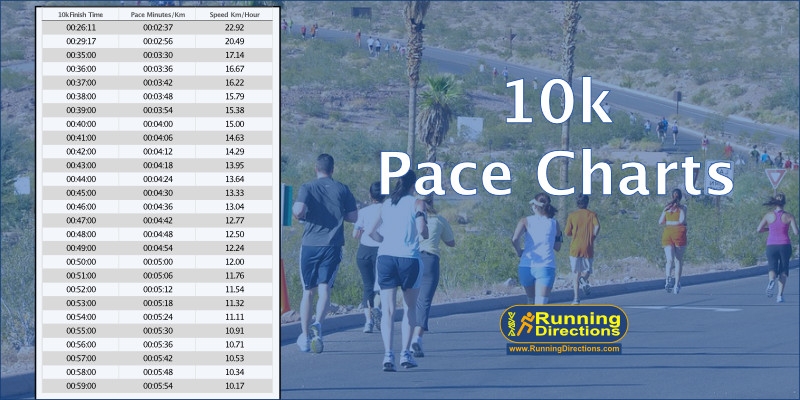 10K Run Times Chart - timechartprintables.com
Interval Training
Interval training, or high-intensity interval training (HIIT), involves alternating between intense bursts of exercise and short recovery periods. This type of training can significantly improve your running speed and endurance. Try incorporating some interval workouts into your training plan.
Strength Training
Strength training isn't just for bodybuilders. It can also help improve your running performance. Stronger muscles can help you maintain your pace and reduce fatigue. Incorporate some bodyweight exercises or weightlifting into your routine.
Rest and Recovery
Rest is not idle time. It's when your body repairs and strengthens itself. Make sure to give your body adequate rest between runs. This will help prevent injuries and improve your overall performance.
Fun Facts and Cultural References
Did you know that the 10km distance is a popular one in many cultures? In Japan, the annual Tokyo Marathon features a 10km race, attracting thousands of runners each year. In India, the Airtel Delhi Half Marathon includes a 10km category.
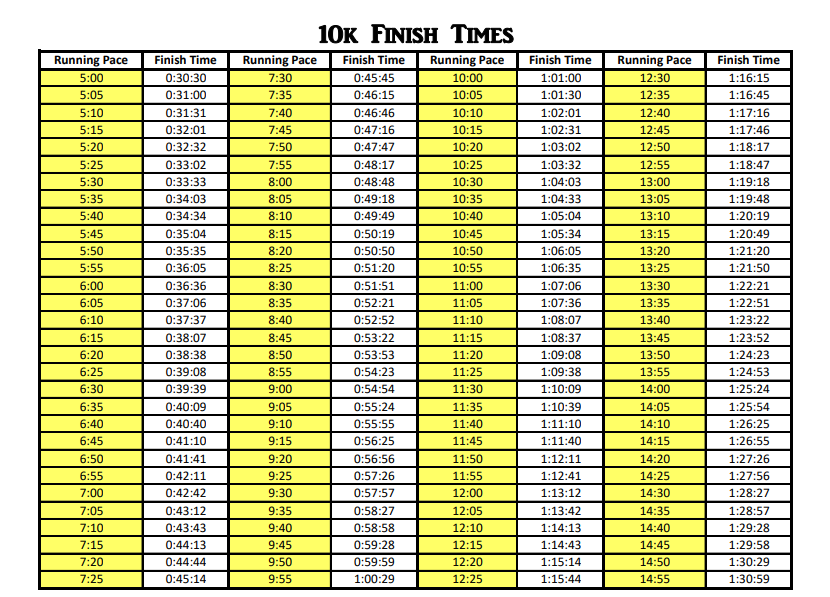 10K Time Chart - timechartprintables.com
And if you're a fan of pop culture, you might recognize the 10km distance from movies like "Forrest Gump". In the film, Forrest famously runs across the United States, covering a total distance of over 15,000 miles. That's equivalent to running a 10km race over 1,500 times!
Reflection: It's Not Just About the Time
As we wrap up, let's take a moment to reflect on why we run. Sure, it's great to set goals and strive for personal bests. But it's also important to remember that running is about more than just the time on the clock.
It's about the feeling of the wind in your hair, the rhythm of your feet on the pavement, and the sense of accomplishment that comes from pushing your body to its limits. It's about the journey, not just the destination.
So, whether you're clocking in at 30 minutes or 60 minutes for a 10km run, remember to celebrate your progress and enjoy the process. After all, every step is a step forward.
