Is There A Period After Et Al

Alright, gather 'round, folks! Today, we're diving into the wild world of punctuation. Now, I know what you're thinking, "Punctuation? Really? Can't we just talk about tacos o...
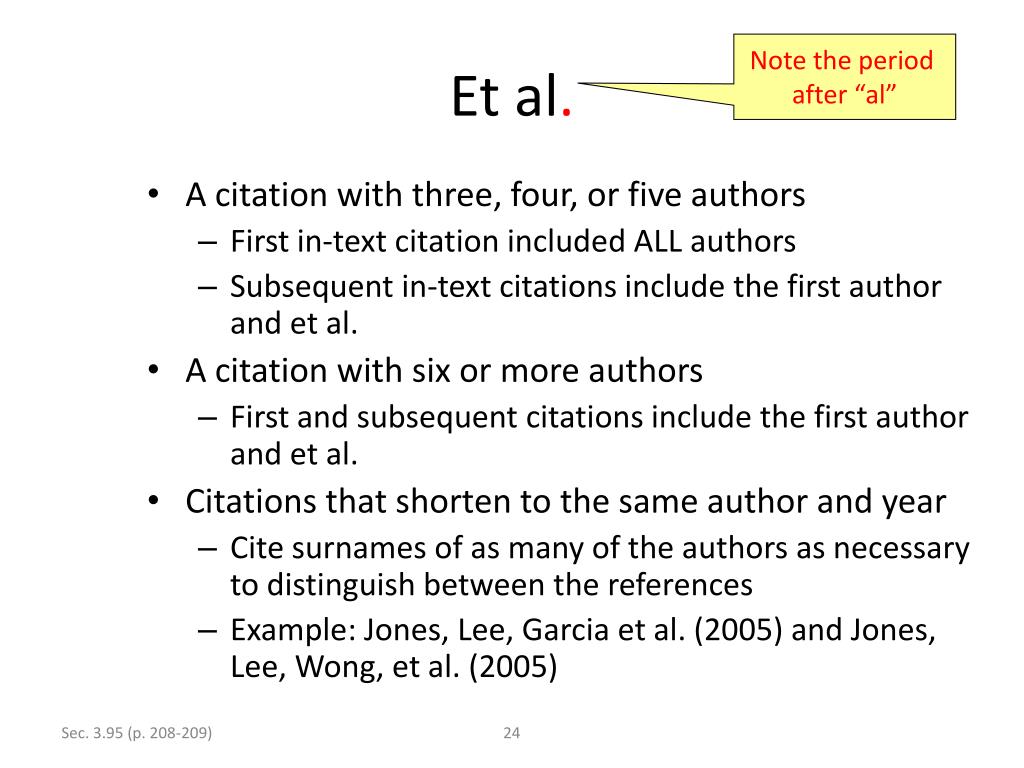
Alright, gather 'round, folks! Today, we're diving into the wild world of punctuation. Now, I know what you're thinking, "Punctuation? Really? Can't we just talk about tacos or something?" Well, stick with me, because this is gonna be a blast. We're gonna tackle a question that's been plaguing scholars and laymen alike since the dawn of time (or at least since the dawn of 'et al.').
So, is there a period after 'et al.'?
First things first, let's break down our culprit. 'Et al.' is Latin for 'and others'. It's a handy little phrase that lets us say, "Hey, there are more people involved in this, but I'm too lazy to list them all." Okay, maybe not lazy, but you get the gist.
Now, you might think that since 'et al.' is an abbreviation, it should end with a period, right? I mean, we do that with other abbreviations like 'Mr.' or 'Dr.' But hold onto your hats, because this is where things get interesting.
When in Rome... or rather, when in Latin
Here's the thing, folks. 'Et al.' is Latin, and in Latin, abbreviations don't usually end with a period. So, when we're using 'et al.' in a formal context, like in a research paper or a legal document, we're supposed to follow Latin convention. That means no period at the end.
But wait, you say! What about all those times you've seen a period after 'et al.'? Well, my friend, that's because English is a forgiving language. In informal contexts, or when we're writing for a general audience, it's perfectly acceptable to add that little period. It's like a friendly wave to the reader, saying, "Hey, there are more people here, but I'm not gonna make you read through the whole list."
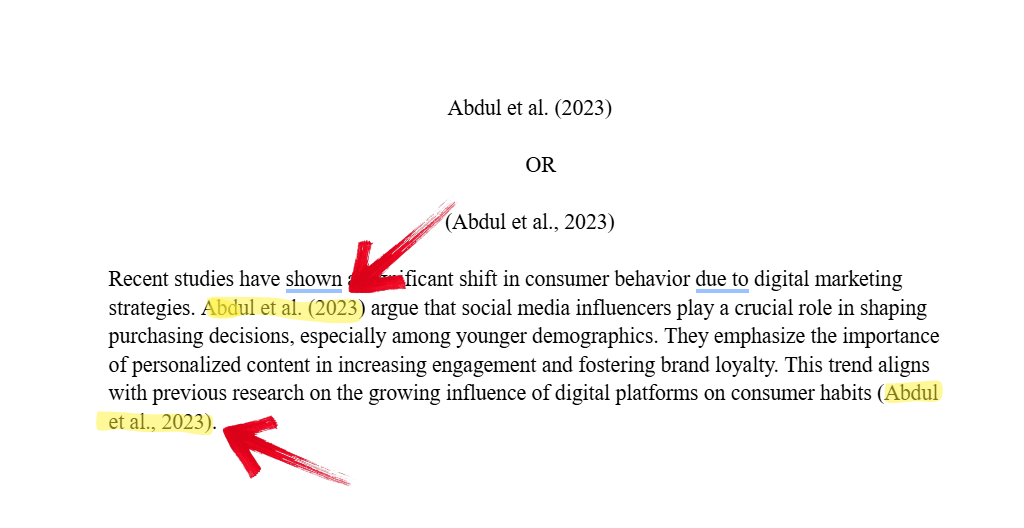 How to Use et al. Correctly in Academic Writing (APA, MLA, Chicago)
But wait, there's more!
Now, you might be thinking, "Okay, okay, I get it. No period in formal contexts, period in informal ones. But what about when 'et al.' is at the end of a sentence? Do I add two periods?" Great question! The answer is no, you don't. When 'et al.' is at the end of a sentence, it's considered part of the sentence, so you only need one period.
Here's a quick example: "The study was conducted by Smith et al. (2021)." See? Just one period at the end. Easy peasy, lemon squeezy.
So, why should you care?
Alright, so maybe you're not writing a research paper every day. Maybe you're more of a 'Great Expectations' than a 'Scientific American' kind of reader. But here's the thing: punctuation is like the seasoning of language. It might seem small, but it makes a big difference in how we communicate.
 3 Ways to Use Et Al - wikiHow
Think about it. A comma can change the meaning of a sentence entirely. A period can signal the end of a thought. And 'et al.'? Well, it's a shorthand that lets us share information quickly and efficiently. So, the next time you're reading a paper or writing an email, remember that punctuation is your friend. It's there to help you communicate clearly and effectively.
And now, for the grand finale...
So, is there a period after 'et al.'? The answer is: it depends. But here's the thing, folks. Whether you're using 'et al.' in a formal context or an informal one, whether you're adding a period or not, the important thing is that you're communicating. You're sharing ideas, you're learning, you're growing. And that, my friends, is what makes life worth living.
So, go forth, punctuate with pride, and remember: every period, every comma, every 'et al.' is a step towards a more connected, more informed world. And who knows? Maybe one day, you'll be the one saying 'et al.' at the end of a groundbreaking study. Now, isn't that something to look forward to?
