Efficiently Disentangle Causal Representations

So, you're here because you've got a tangled web of data, huh? You're not alone, my friend. We've all been there, staring at a mess of variables, scratching our heads, and won...
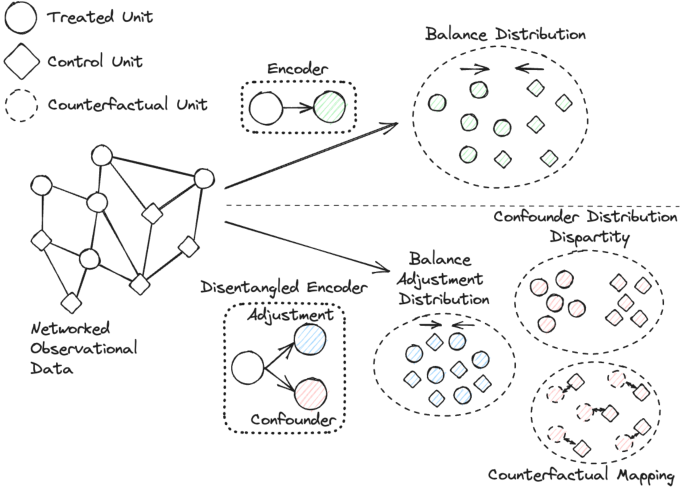
So, you're here because you've got a tangled web of data, huh? You're not alone, my friend. We've all been there, staring at a mess of variables, scratching our heads, and wondering, "What causes what here?" Well, grab your coffee, let's dive in and untangle this causal chaos together.
First things first: What's this causal representation thing all about?
Alright, imagine you're at a party. You see X drinking a lot, and then they're dancing on the tables. Now, you can't say for sure that the drinks caused the dancing, right? But you can say there's a relationship there. That's basically what causal representation is - finding these relationships in your data.
Now, let's talk about why you should care about disentangling these representations.
Ever played that game 'Telephone'? You whisper a message, it gets passed around, and by the end, it's nothing like the original. That's kind of what happens when you've got tangled causal representations. You can't make sense of your data, can't make predictions, and can't make decisions based on it. It's a mess, and it's holding you back.
But don't worry, we've got some tricks up our sleeve to help you out.
First off, let's talk about Structural Equation Modeling (SEM). It's like having a detective on the case. SEM looks at your data, finds the direct and indirect effects between variables, and helps you figure out what's causing what. It's a party trick you'll want to have in your back pocket.
 Figure 1 from Learning Causally Disentangled Representations via the
Next up, we've got Causal Loop Diagrams (CLDs). Ever tried to draw a flowchart? CLDs are like that, but for causes and effects. You draw arrows between variables, and suddenly, you can see the causal loops in your data. It's like untangling a knot - once you see it, it's easy to fix.
And hey, if you're feeling fancy, you might want to try out Bayesian Networks. They're like a game of '20 Questions' for your data. You ask questions, the network gives you probabilities, and before you know it, you're making sense of your tangled web.
 Causal disentanglement for single-cell representations and controllable
So, are we saying you should drop everything and start disentangling?
Well, not quite. Disentangling causal representations takes time, and it's not always easy. But remember, every knot starts with a single strand. Take it one step at a time, and soon enough, you'll be dancing on the tables with your newly disentangled data.
And hey, if you ever feel lost, just remember: we're all in this together. So, grab another coffee, and let's keep chatting about data, causality, and all the fun stuff in between.
